
Checking Criminal History in Carroll County
No single database contains every Carroll County criminal record. A useful search begins with the type of event and follows the record through its custodians. Judici can show a public circuit case, but it does not replace the clerk's signed orders. A sheriff or city police report explains an alleged event, while a jail booking sheet documents intake. The Illinois State Police, or ISP, maintains the statewide criminal-history repository.
- Search Carroll County cases in Judici by full case number when possible, or use a careful name search.
- Ask the Carroll County Circuit Clerk for the filed order or a certified disposition when the result matters.
- For a recent event, contact the arresting agency and county jail. The report and booking record have different custodians.
- Use ISP CHIRP for public Illinois conviction information. Review your own fuller state file through ISP Access and Review.
- Check IDOC for a sentenced state prisoner, or PACER and the federal Bureau of Prisons for a federal matter.
This order avoids a common error: treating one no-result screen as proof that no record exists. Spelling, court selection, filing delay, older coverage, transfer, sealing, or a case in another county can change what appears.
Carroll County Criminal Records Hub
The official Carroll County Courthouse directory shows the county's central court-record location. The courthouse at 301 North Main Street in Mount Carroll houses the Circuit Clerk, whose public hours are listed as 8:30 a.m. to 4:30 p.m. The clerk can locate filed complaints, docket entries, judgments, sentencing orders, and certified dispositions. Call 815-244-0230 before a trip when an older file may need retrieval.
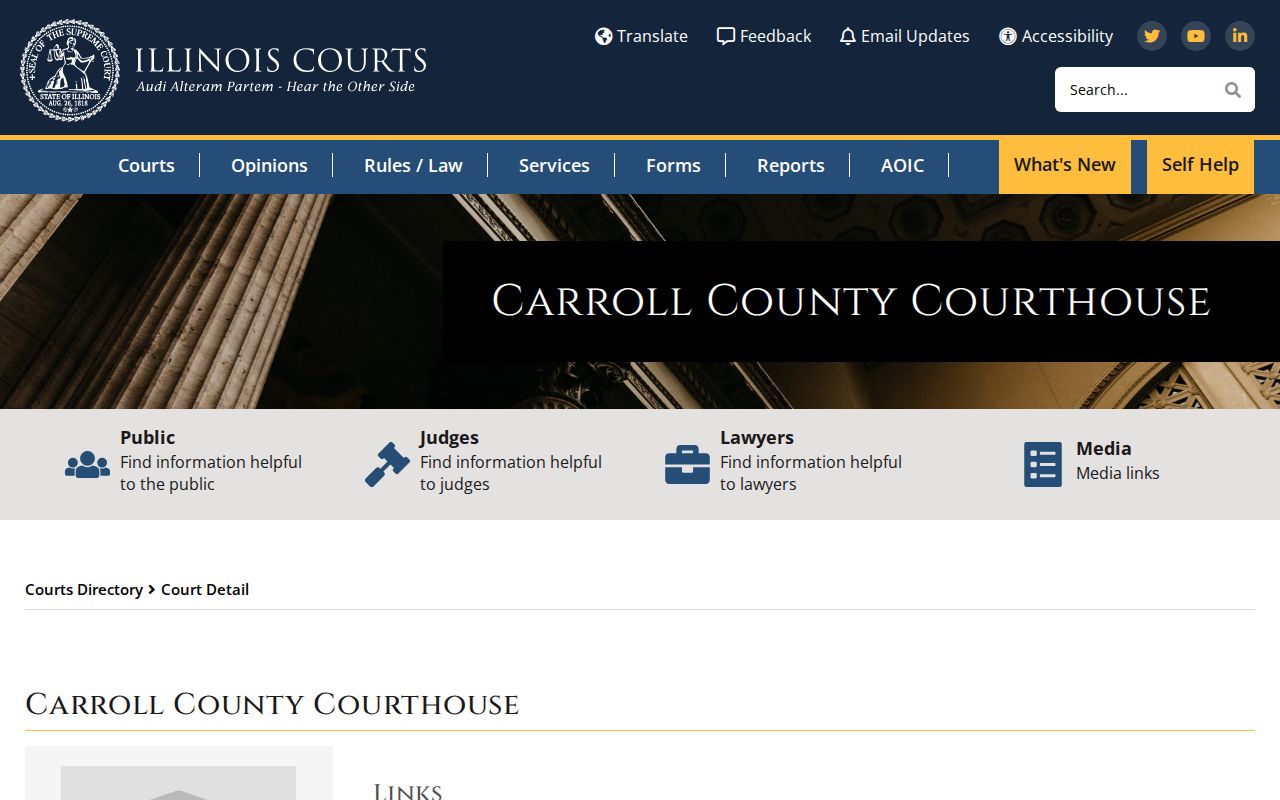
Free parking is available around the square, and Carroll County Transit can be reached at 815-244-0011. The second-floor law library has a self-help center, e-filing computer, internet, and printing. Interpreters are available as needed, and the directory identifies an ADA coordinator. These details matter when a portal lacks an order or a person must file a record-clearing request.
Illinois Official Background Checks
The ISP Bureau of Identification provides Illinois's official public conviction product through the Criminal History Information Response Process, known as CHIRP. Account users can submit name-based inquiries. The ISP criminal-history overview explains the scope of that state repository service.
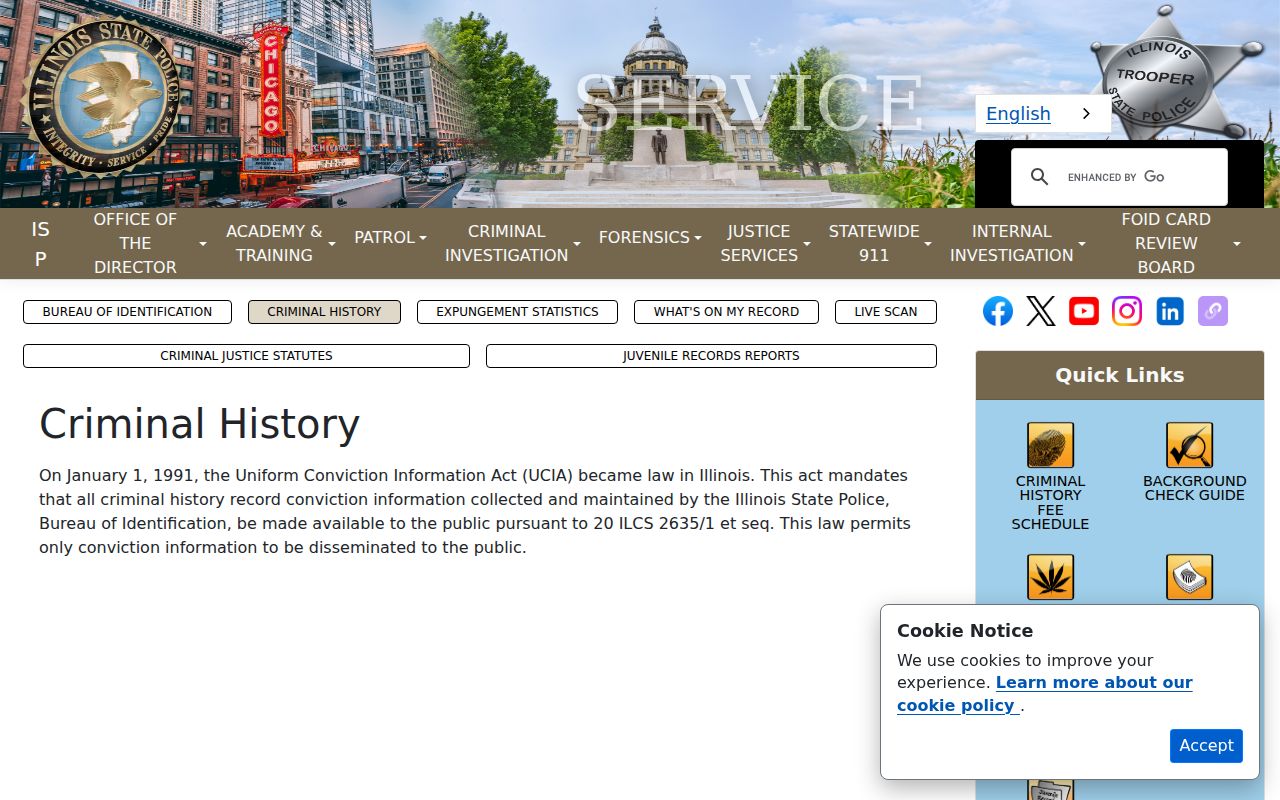
The live CHIRP portal is the online entry point. It requests account and subject details appropriate to the inquiry type. Name matching is less exact than fingerprint matching, so dates and other identifiers must be checked before connecting a response to one person.
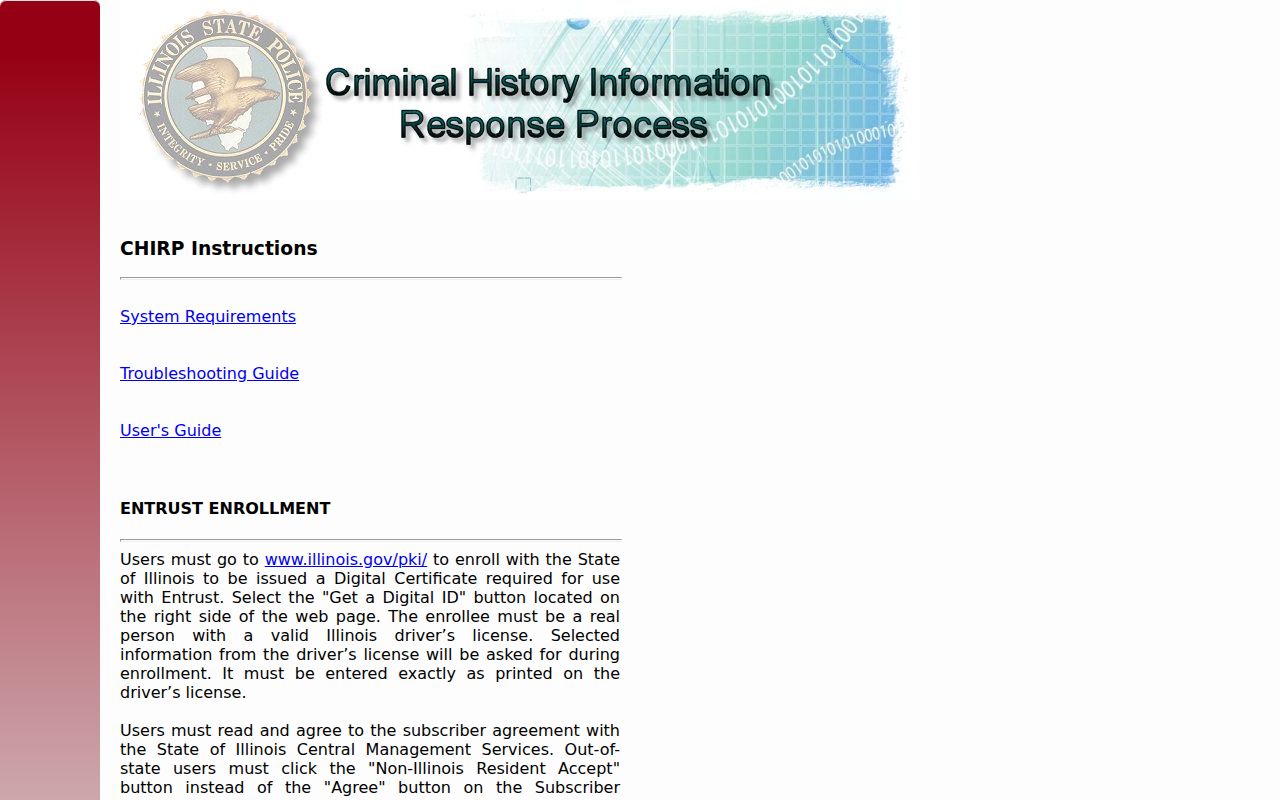
| ISP product | Published base fee | Purpose |
|---|---|---|
| Electronic name inquiry | $10 | Public Illinois conviction response |
| Manual paper name inquiry | $16 | Paper route for the same statutory product |
| Electronic fingerprint-card UCIA | $15 | Fingerprint submission; capture cost may be extra |
| Paper fingerprint-card UCIA | $20 | Paper submission; mailing and capture are separate |
| Access and Review | No ISP processing fee | Review and challenge one's own Illinois record |
Fees can change. The ISP fee schedule controls rather than a copied price list.
Carroll County Criminal Records Custodians
Myth: the Sheriff's Office holds every police record made in Carroll County. Fact: each agency keeps the reports its officers create. Savanna, Lanark, and Mount Carroll police material should go to the relevant city. Illinois State Police keeps trooper reports. The sheriff holds sheriff incidents, county bookings, and jail records. The Circuit Clerk holds filed court cases.
The county government directory helps route county-level requests and shows the offices currently serving the public.
A Savanna officer's narrative can remain with the city while the person is held by the county jail and prosecuted through the circuit court. Requesters often need all three records because each answers a distinct question.
Criminal Record Types
Carroll County records develop in stages. An incident report records observations, interviews, evidence, and allegations. An arrest record documents the legal act of taking a person into custody. If the jail accepts the person, booking produces a separate identity and custody file. Prosecutorial decisions then shape the charges filed in circuit court.
- Criminal court cases show filed counts, hearings, docket activity, dispositions, and sentencing.
- Arrest records connect the arresting agency, booking, and later case without treating allegations as guilt.
- Registry records provide statutory public-safety information through the Illinois Sex Offender Registry.
- Custody records cover the county jail, IDOC, or federal prison depending on where the person is held.
- Probation and parole records are more restricted; public status usually comes from the sentencing docket or correctional locator.
A warrant notation is another narrow record. Carroll County has no verified public active-warrant database. Judici may show that a warrant was issued or quashed, but operational status should be confirmed with the issuing court, clerk, sheriff, or counsel.
How Carroll County Records Reach ISP
Record flow: arresting agency › Carroll County Jail › ISP fingerprint cycle › prosecutor › Circuit Clerk disposition › ISP match.
A reportable booking sends fingerprints to ISP under a transaction control number, or TCN. ISP links the arrest segment to a state identification number. The court later reports charge changes and the disposition. Reporting or matching lag can leave a cycle without a visible outcome even after the court has acted. A blank field does not prove that a case remains pending.
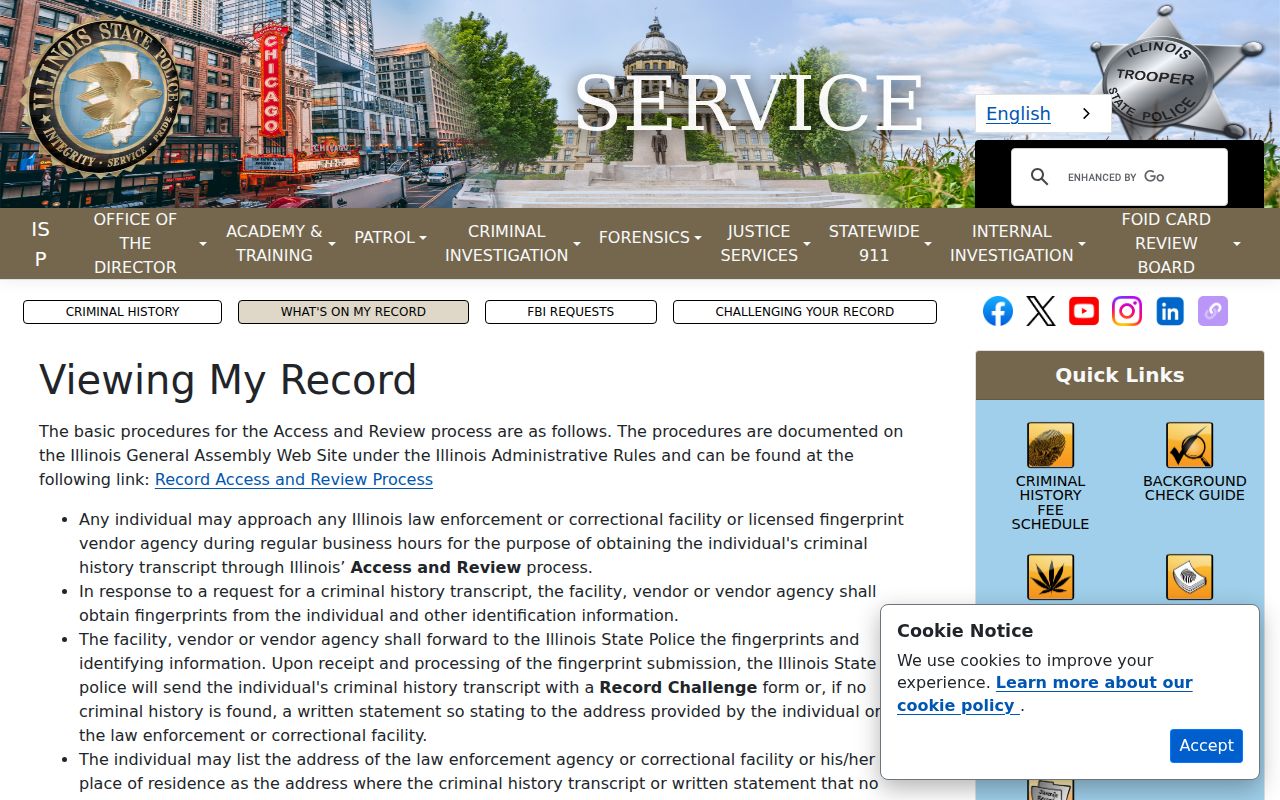
When your own Illinois record appears wrong, obtain a certified disposition from the Circuit Clerk and use ISP Access and Review. That process relies on fingerprints and includes the Record Challenge route.
Inside a Carroll County Criminal Record
The visible fields depend on the record. A court case is organized around its case number and docket. A state history is organized around fingerprint cycles. A booking sheet focuses on intake and custody. Compare identifiers, event dates, charge statutes, and the final court result rather than relying on a name alone.
| Name and identifiers | Legal name, aliases, date of birth, state ID, FBI number, or case-specific identifiers when law permits. |
|---|---|
| Arrest and booking | Agency, date, booking number, presented charges, warrant references, and custody status. |
| Charges and statutes | Counts alleged at intake or later filed by the prosecutor, with Illinois citations and offense classes. |
| Disposition | Dismissal, acquittal, plea, finding, or conviction for each filed count. |
| Sentence | Custody, probation, fines, assessments, restitution, and signed sentencing terms. |
| Custody or supervision | County detention, IDOC status, release, or court-ordered supervision where publicly available. |
Identifiers have different jobs. A SID identifies an Illinois subject, an FBI or UCN number refers to a federal identity record, and a TCN identifies one fingerprint transaction. They are not interchangeable.
Carroll County Jail Booking Records
No stable official searchable Carroll County jail roster was verified. No official sheriff or local police mobile app was found either. The honest path for a recent custody question is to use the current Sheriff's Office and jail page, call the published number, and provide a legal name and approximate booking date. Ask whether the person is held, released, or transferred, plus how to request the booking sheet.
A releasable booking sheet may include the booking number, intake time, agency, presented charges, case or warrant reference, custody status, and release method. Medical, mental-health, safety-watch, housing, victim, juvenile, and protected identity data should not be expected. If the person moved to state prison, use IDOC. VINELink can support custody-change notifications, while the federal Bureau of Prisons covers federal custody.
Public Access Laws in Illinois
Public access depends on the custodian and the record. Illinois FOIA governs requests to police and county bodies, while court files follow court access rules and clerk procedures. Agencies should redact releasable records when feasible, cite exemptions, and explain review rights. A routine noncommercial FOIA request generally receives a response within five business days, subject to a written statutory extension.
Key statutes:
5 ILCS 140/3 and 140/6 set request timing and general copy-fee rules, including the first 50 black-and-white letter or legal pages without charge in ordinary cases.
20 ILCS 2635 governs public access to ISP-held Illinois conviction information.
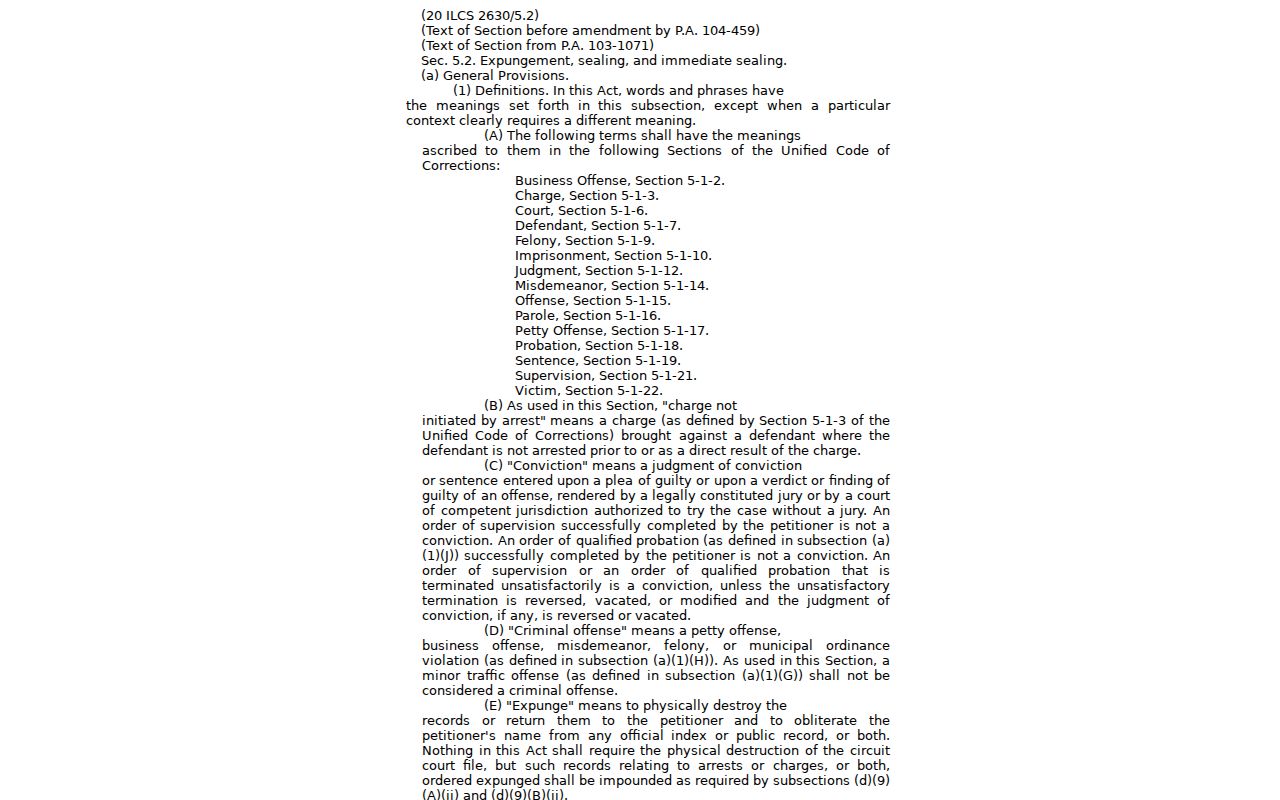
20 ILCS 2630/5.2 governs Illinois expungement and sealing.
705 ILCS 405 protects juvenile records and provides juvenile expungement rules.
The Illinois Attorney General's Public Access Counselor reviews qualifying FOIA disputes.
Carroll County FOIA Record Requests
Illinois does not require a statewide request form. A focused request should identify the requester, the exact record, a date range, event location, involved names, and any report number. State whether inspection or copies are wanted, name a useful electronic format, and ask for notice before costs exceed a chosen ceiling. Retain proof of submission to the agency's current FOIA officer.
A police agency may redact victim or minor details, confidential sources, sensitive methods, personal information, or material whose release would cause a listed law-enforcement harm. A denial should cite the legal ground. Route city-created reports to the city, sheriff-created reports to the county, and trooper reports to ISP. Filed pleadings and orders still go to the Circuit Clerk.
Sealed, Expunged, and Restricted Records
Illinois distinguishes expungement from sealing. Expungement generally removes or destroys eligible arrest and court records so the event is treated as though it did not occur. Sealing blocks ordinary public access while preserving access authorized by law. Nonconviction outcomes and some supervision or probation dispositions may qualify for expungement. Many convictions may be sealed, but statutory exclusions and wait periods make eligibility case-specific.
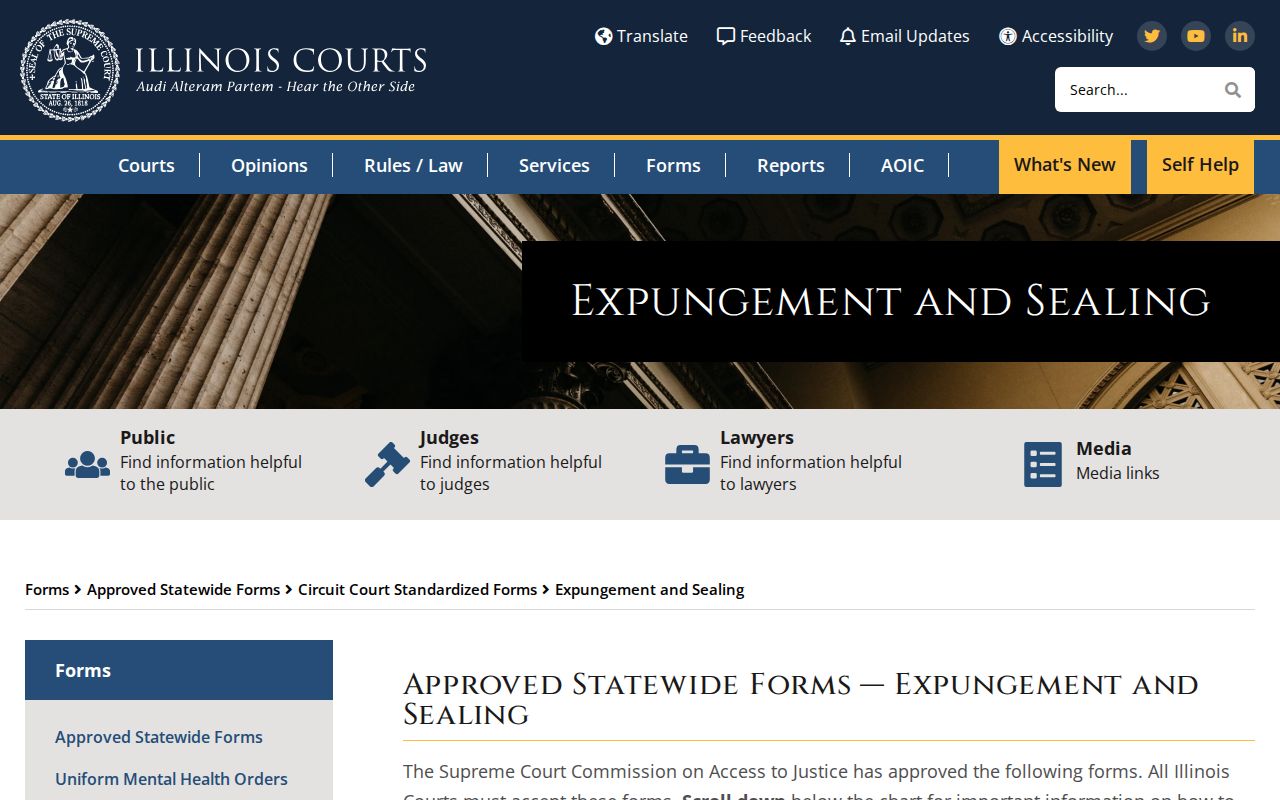
File in each county that contains an arrest or case. Carroll matters go through the Circuit Clerk at 301 North Main Street. Obtain your record and certified dispositions first, list every arresting agency, complete the request and case list, and include proposed orders and service material. The Illinois Courts clearing-forms page supplies statewide forms and a guided Easy Form.
The controlling statute is 20 ILCS 2630/5.2. It defines eligible outcomes, exceptions, notice, objections, and implementation duties.
Reading New Carroll County Court Dockets
Illinois ended cash bail under the Pretrial Fairness Act. New Carroll County dockets may show detention petitions, detention orders, or conditions of release instead of the old cash, surety, or ten-percent bond model. A stale description that promises a set payment will clear a warrant or secure release is unreliable. The judge decides release conditions and whether a qualifying detention petition supports detention.
Docket shorthand also needs care. “Warrant issued” does not prove that it remains active, and “warrant quashed” should be checked against the later docket. A docket line is not always the signed order. Ask the clerk for the document when exact terms affect the purpose of the search.
Carroll County Criminal Records by City
The three largest incorporated municipalities styled as cities in the 2020 Census are Savanna, Lanark, and Mount Carroll. Their police departments create local incident, crash, and arrest reports. Resulting prosecutions move into the unified Carroll County Circuit Court rather than separate city felony courts.
Savanna Criminal Records
Population 2,783. City police reports start at Savanna offices; bookings and court outcomes move to county channels.
Lanark Criminal Records
Population 1,504. Lanark prominently routes police crash reports from its official city homepage.
Mount Carroll Criminal Records
Population 1,479. City police, county sheriff, and circuit records remain distinct in the county seat.
Savanna's Mississippi River location also makes the national NSOPW registry search useful for cross-state awareness. A search confined to Illinois may miss an Iowa address just across the river.
Historic Carroll County Court Records
Modern Judici coverage should not be assumed to include every old Carroll County proceeding. Begin with the active Circuit Clerk and provide an approximate year, party name, and record type. If the record was transferred, the Illinois Regional Archives Depository guide for Carroll County identifies historic government and court series that reach back into the nineteenth century.
The archive route is useful for genealogy and older case research, but it is not a current criminal-history check. A modern certified disposition still comes from the active clerk when the court retains the file.